Tuesday, August 28, 2012

Pain and Laughter


What a pity it is to be born a romantic. Try as you might, you can never escape the borders of fairyland. That is to say, you can never leave this world nor can you plunge across into Rivendell. You hang in the frontier country, always seeing your patria from the neighborhood over, but never crossing the street, and, in New Orleans, it is so easy to be a romantic, so easy to indulge in the in-betweeness of the wayfarer. On Sunday, when I found out that I would be evacuating once more, I made a point of wandering the streets of our great city, aimlessly making my way to Audubon Park, for that is the secret way of life for the natives of our town: to be passionately devoted to being nonchalant. When it comes to letting the good times roll, we roll up our selves and work at it (it is perhaps the only thing we really work at). We order life around parades, closing our schools and allocating their buses to the project. We set our schedules according to the festivals. Overtime is not something we do at our jobs and is only heard when discussing the (football) Saints. The (Church's) Saints have, historically speaking, come to our town to sing and party, not just pray and repent. And so, when I set out from my door going about the important business of getting lost, the only desire I had in my heart was that I should end up at a park and climb a tree.

Thus, I cannot say how I ended up in Audubon park, nor why I continued to wander there for many hours more, but I can say that it was utterly intentional when I finally mounted a half-naked magnolia missing limbs from a previous storm. With her remaining limbs, the tree wrapped me up and so that I might fall, not to the ground, but further in love with my home city. And, much as it is when falling in love with a woman, I found that she looked both more simple and more beautiful than she typically does. The air was dry and cool. There was a slight breeze. The Spanish moss tickled me delicately, draped from the trees' limbs. People talk about seductive women on Bourbon St., but I have never made it that far. I am always taken in by Dame Oak and Lady Willow long before I can make it to the French Quarter.

From within the arms of Miss Magnolia, I looked around at the elegant houses and even more elegant streets that, like my magnolia, still bore marks from Katrina. I reflected that, on the anniversary, we would once again be rebuilding. As I climbed down and walked home, I saw the water lines on the houses left from the last storm. Memories of that flood triggered a strange feeling to flood my consciousness. It was that pale, sickly feeling of helplessness that I first felt seven years ago on that same day. "Will I see this all again? How much will have changed when I walk this street next time?"
As I stated before, New Orleanians never plan their route. As such, we never know just when we'll be back on even the closest streets to our houses. Thinking that our city might change due to forces beyond our control was perhaps the most drab and sickening thought that lingered after Katrina. And oh, Change! How we hate that word! We like things done the same way again and again. Change imposes planning, and we perfer to expend that energy enjoying ourselves. We don't like the planning process. We perfer simple action. The party is in the performance. The devil is in the details. That is why we hate change.

This is one aspect of my citizenship that is always in conflict with my creed, where my affection for NOLA finds tension with my loyalty to Kingdom. For Christians are always concerned, even to the verge of paranoia, with the concept of conversion, with the concept of change. So I asked my God whether or not I would have to change again. And He laughed at my silliness. Change again? As if the change Katrina wrought could be repeated!? He made me remember my CS Lewis; "Things never happen the same way twice" said Aslan. Katrina was purification, and not all tears are evil. Isaac is laughter, and not all laughter is flippant. Sometimes laughter strikes with a pain more intense than purgatory, for laughter conceals in its heart the very essence of humility. Tears can be selfish, but laughter is never permitted to be. Because it depends on humility for life, arrogant laughter does not simply offend good manners: it violate the principle of non-contradiction.

Romantics know well the need for laughter, their need for Isaac. As I said before, we live on the border land. Its not that we are citizens without a country, but a people torn between two countries, delicately balancing the pleasures and pains of each. For the pain of being outside of heaven is more manifold than the pleasures of this world. Each of us bears this pain in a different way. Some call it Holocaust. Some call it War. Some call it Disease. Some call it 'the Storm,' but each of these pains produce in us a secret link between the world and the fairyland, between earth and heaven, that makes us a mediator like our Beloved Mediator. "Things never happen the same way twice." Every pain is as unique as the one who bears it, nay, it is more unique. Because it reveals not just the person at their most intimate, but the One more infinite in Good and Variety than all others, our humble laughter does not obscure, but rather enhances this manifold Goodness. Think how agonizingly repetitive merely mirthful moments are. Weddings, birthdays, graduations are redundant with an almost anarchistic similarity. God has to flood these events with His Goodness or we sinners would all grow bored with them. The real miracle, though, is that pain can produce laughter, and that laughter comes in the greatest variety, revealing the full spectrum of human goodness and metaphysical wonder. We leave home entirely uncertain of what trials we will endure, but confident that we will come to a party at the end. We are so confident, that we wonder as we wander and laugh as we set out in the serious business of losing ourselves. The greatest joke in the universe, the greatest act of irony, is that to save our life we must lose it. It was so worthy of Isaac, of laughter, that God Himself was more than willing to become the punchline, taking Isaac (laughter's) place on Mt. Moriah when He stayed the hand of Abraham. So do not fear the storm. Do not weep over what is lost. What is lost was good, but what comes later, like at the end of a joke, is a Punchline worthy of both heaven and earth.

Friday, August 17, 2012

Concupiscence, True Communion, and 'Friends'

I decided to repost my first thoughts posted on blog format. This post originally was written on Monday, June 30, 2008.
It does not correspond to the personal union or 'communion' to which man and woman have been reciprocally called 'from the beginning,' in fact, it is contrary to it, that one of the two persons should exist only as a subject of satisfaction of sexual urge and that the other should become exclusively the object for such satisfaction. Further, it does not correspond to this unity of 'communion'--in fact, it is contrary to it--that both the man and the woman should mutually exist as objects for the satisfaction of sexual urge, and that each of them on his or her own part should be a subject of such satisfaction. Such a 'reduction' of the rich content of reciprocal and perennial attraction among human persons in their masculinity and femininity does not correspond to the 'nature' of the attraction in question. Such a 'reduction,' in fact, extinguishes the meaning proper to man and woman, a meaning that is person and 'of communion,' through which 'the man will... unite with his wife and the two will be one flesh' (Gen 2:4). 'Concupiscence' removes the intentional dimension of the reciprocal existence of man and woman from the personal perspective 'of communion,' which are proper to their perennial and reciprocal attraction, reducing this attraction and, so to speak, driving it toward utilitarian dimension, in whose sphere of influence one human being 'makes use' of another human being, 'using her' only to satisfy his own 'urges.'
Man and Woman He Created Them: A Theology of the Body by Blessed John Paul II
Friends was one of the big sitcoms in the 90's (you can hear the claps from the theme clap-clap-clap-clap). It had a lot of influence on my generation. Yet, this quote from John Paul II puts forward the basic weakness of the series.

There is a total reduction of the relationship between man and woman to one of sexual satisfaction. The two friends who ended up marrying each other began their intimate relationship with sex. When they hid the 'relationship' from the other friends, they where hiding the fact that they were having sex. To my knowledge, which is limited and finite, and possibly wrong, they didn't go out on a 'date' until it was public knowledge that they were dating.

A relationship which ended in marriage was based and grounded upon a sexual relationship, i.e. sand. This is what my generation saw each week, and it is what John Paul II called the utilitarian dimension, wherein the person of the opposite sex is an object for sexual gratification. The ideal in this dimension is mutual sexual gratification, which, to many nowadays, means a basis for a solid marriage.

Monday, August 13, 2012

Is Collecting Bad?: The Fountain Pen and Our Consumerist Culture

To "have" objects and goods does not in itself perfect the human subject, unless it contributes to the maturing and enrichment of that subject's "being," that is to say unless it contributes to the realization of the human vocation as such ... The danger of the misuse of material goods and the appearance of artificial needs should in no way hinder the regard we have for the new goods and resources placed at our disposal and the use we make of them. - Bl. John Paul II Sollicitudo Rei Socialis 28,29

These seem to be contrary statements, but are rather intended to moderate our use of material goods. We live in  a society that idolizes materiality. I feel like I'm preaching to the choir being that most of us realize this. Realizing it is one thing, and not participating in it, is another thing altogether.

Take myself as a poor example. Back in January, I fell in love with fountain pens (they write so much better than ballpoints). They're messy. They are really nice looking, and they leave you open to an endless possibility of inks.

I loved taking notes with them while in my final semester of classes. I actually no longer took notes on my laptop or iPad. Over the course of six months, I have purchased a total of ... 1, 2, 18 fountain pens. My latest purchase is a set with Benedict XVI's signature on it. I got caught by the collector consumer bug, courtesy of Amazon and eBay. 

Now, seriously Kyle what are you going to do with eighteen fountain pens? Well, I use this one for this and this one for that and that one for signing checks and that one for homilies. I still don't use them all. I gave one to my sister. A few ended up being duds and unusable (which in itself proves the point).

Pens hold a certain nostalgia to them. Some of them make really cool fancy lettering. Some of them just look cool (like the one second from the left in the picture that is made from olive wood from the holy land.) 

Pens can contribute, as Bl. John Paul II, to the realization of the human vocation. They can be used to write down thoughts (I write out my homilies because for me, typing requires less energy and less memory). Thoughts are very important in the realization of the human vocation. They can communicate truth and beauty. But "to 'have' objects and goods does not in itself perfect the human subject." In other words, I don't need 17 pens to write my homily. I only need one. 

Where is the line drawn (no pun intended)? Is collecting things a pursuing something that does not bring us closer to God? Are there moral justifications for collecting, whether it be baseball cards, stamps, or fountain pens? Does such a hobby build us up? Dear reader, these are questions for which I do not have an answer. Sound off if you so desire and let me and others know what you think.

Friday, August 10, 2012

Go to Confession and Go Out to the World


True conversion of hearts, which means opening ourselves to the transforming and regenerative action of God, is the 'motor' of all reform and turns into an authentic force for evangelisation. During Confession, the repentant sinner, thanks to the gratuitous action of divine Mercy, is justified, forgiven and sanctified. ... Only those who allow themselves to be profoundly renewed by divine Grace can internalise and therefore announce the novelty of the Gospel.
Bl. John Paul II Dives in Misericordia

Thursday, August 9, 2012

The Contests Between Political Parties and What a Pope Thinks

To these evils we must add the contests between political parties, many of which struggles do not originate in a real difference of opinion concerning the public good or in a laudable and disinterested search for what would best promote the common welfare, but in the desire for power and for the protection of some private interest which inevitably results in injury to the citizens as a whole. - Ubi Arcano Dei Consilio Pius XI
This was written in 1922. It was the encyclical of the pontificate of Pius XI. This is part of what he had to say. I do not normally enter into the realm of politics when I blog, but I read this a few months back and was struck by the force of its truth as well as the appropriateness for our current political situation in the United States. I'll let him speak for himself.
Pius XI in his office (via Wikimedia Commons)

Thursday, July 19, 2012

Gratitude=Happiness x Wonder


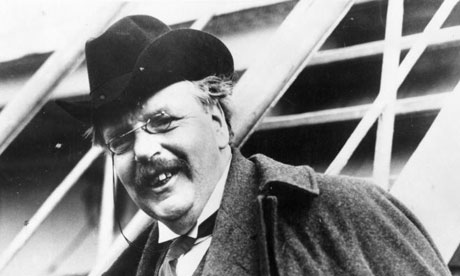
"I would maintain that thanks is the highest form of thought; and that gratitude is happiness doubled by wonder."-GKC, 1917

There are truly refreshing moments in life when we are relieved of the pressure of standing alone with some thought by discovering that it has already been said or thought by another. When I read the above quote, I was so taken up by the joy of this phrase that I wanted to share it with all those present. I felt as if something special, almost sacramental, had occured. And indeed (as you will read), a communion had taken place. Unfortunately, the place I found myself reading this passage was a coffee shop, where such delicate and delicious thoughts lost in the shuffle. Starbucks does us no favors by printing all sorts of maxims on their cups: one becomes deceived that they are all of equal quality (isn't it ironic that, regardless of quality, they all end up in the garbage can).

Anyway, for months now I had found myself trying to say that above quote, but being impaired by not having yet read it. In fact, I had almost taken the extremely treacherous step of trying to write the idea out myself, but was happily prevented from doing so by discovering that I was a century too late. So, instead of a sloppy, second rate version of the above truth, I was taken up with the less tedious task of writing a commentary on it.

And the commentary will be short (though commentary is never as brief as the primary source): Our dependence on God creates as thrill in us that can reach the point of anxiety. Speaking personally, my experience of it often involves a signifigant amount of anxiety. Recently, a close friend of mine rightfully corrected this anxiety by comparing our reception of God's grace to the catching of a frisbee. She stated that, just like a frisbee, grace seems to waver delicately between heaven and earth. She insisted, however, that this should not be a source of fear. We should be confident that, if God tossed us the frisbee, He had ever intention of our catching it. And the intention of the Divine is above suspicion.

Now, she left off the metaphor here, but I will pick it up again by pointing out that I have often dropped a frisbee. She was very right to correct my fear, but the fear was justified. The great feeling of gratitude that comes from participating in Reality is that happiness comes at a risk. That is to say, love comes at a price. There can be no wonder unless the pass can be dropped. There must be some real chance that frisbee will slip through my fingers, otherwise my wonder at catching it will indeed slip through my fingers. But my friend was right: fear is not the right response. Wonder is the right response.

I do not plan here to tackle the topic of Divine Will and human freedom, only to comment that our freedom is indeed Divinely willed. God wants to give us grace (otherwise it could not be gratia, gift) and, in doing so, there must be the real risk that we might not acccept that gift (overwise, it would be said to be forced on us, and not given). What has to happen is a willing to unwill, an active choice to be passive and catch the pass. Some call this surrender. Some call this receptivity. Whatever it is called, it result in thanks, in gratitude, in eucharist. And Eurcharist is the source and summit of life.

When we come to God in this way (that is, in the Eucharist) what we find is that startling fact that He came to Himself in this way. He gave Himself on the cross. For our Salvation did indeed waver between heaven and earth, and when Christ passed on His Spirit, there had to be some real risk that the pass might be dropped. And now my commentary must end, for I have reached the limits of what mere words can express. There is a Divine Silence that surrounds this mystery of Calvary, where even the Word refused to speak. All I can say is that when we have some experience of this love, speaking louder in its silence than all the tongues of man, the very value of Reality seems to double up on itself. We exist most when be understand what it would be to cease to exist. Value pours in from every corner of consciousness. Our happiness is multiplied by wonder, even as drift dying in mid-heaven. The matter of catching the frisbee becomes secondary to the fact that there was a God so loving as to pass it to us in the first place. That we should even be there to catch it becomes the content of our gratitude.

Tuesday, July 10, 2012

Of Hair and Health Care, by GKC


This is a Chesterton essay that acts as the conclusion of his book What's Wrong with the World. Though written over a century ago, it asks just how far the government can go in matters of health and hygiene. It's pertinence to our current situation cannot be overstated.

A little while ago certain doctors and other persons permitted by modern law to dictate to their shabbier fellow-citizens, sent out an order that all little girls should have their hair cut short. I mean, of course, all little girls whose parents were poor. Many very unhealthy habits are common among rich little girls, but it will be long before any doctors interfere forcibly with them. Now, the case for this particular interference was this, that the poor are pressed down from above into such stinking and suffocating underworlds of squalor, that poor people must not be allowed to have hair, because in their case it must mean lice in the hair. Therefore, the doctors propose to abolish the hair. It never seems to have occurred to them to abolish the lice. Yet it could be done. As is common in most modern discussions the unmentionable thing is the pivot of the whole discussion. It is obvious to any Christian man (that is, to any man with a free soul) that any coercion applied to a cabman's daughter ought, if possible, to be applied to a Cabinet Minister's daughter. I will not ask why the doctors do not, as a matter of fact apply their rule to a Cabinet Minister's daughter. I will not ask, because I know. They do not because they dare not. But what is the excuse they would urge, what is the plausible argument they would use, for thus cutting and clipping poor children and not rich? Their argument would be that the disease is more likely to be in the hair of poor people than of rich. And why? Because the poor children are forced (against all the instincts of the highly domestic working classes) to crowd together in close rooms under a wildly inefficient system of public instruction; and because in one out of the forty children there may be offense. And why? Because the poor man is so ground down by the great rents of the great ground landlords that his wife often has to work as well as he. Therefore she has no time to look after the children, therefore one in forty of them is dirty. Because the workingman has these two persons on top of him, the landlord sitting (literally) on his stomach, and the schoolmaster sitting (literally) on his head, the workingman must allow his little girl's hair, first to be neglected from poverty, next to be poisoned by promiscuity, and, lastly, to be abolished by hygiene. He, perhaps, was proud of his little girl's hair. But he does not count.


Upon this simple principle (or rather precedent) the sociological doctor drives gayly ahead. When a crapulous tyranny crushes men down into the dirt, so that their very hair is dirty, the scientific course is clear. It would be long and laborious to cut off the heads of the tyrants; it is easier to cut off the hair of the slaves. In the same way, if it should ever happen that poor children, screaming with toothache, disturbed any schoolmaster or artistic gentleman, it would be easy to pull out all the teeth of the poor; if their nails were disgustingly dirty, their nails could be plucked out; if their noses were indecently blown, their noses could be cut off. The appearance of our humbler fellow-citizen could be quite strikingly simplified before we had done with him. But all this is not a bit wilder than the brute fact that a doctor can walk into the house of a free man, whose daughter's hair may be as clean as spring flowers, and order him to cut it off. It never seems to strike these people that the lesson of lice in the slums is the wrongness of slums, not the wrongness of hair. Hair is, to say the least of it, a rooted thing. Its enemy (like the other insects and oriental armies of whom we have spoken) sweep upon us but seldom. In truth, it is only by eternal institutions like hair that we can test passing institutions like empires. If a house is so built as to knock a man's head off when he enters it, it is built wrong.


The mob can never rebel unless it is conservative, at least enough to have conserved some reasons for rebelling. It is the most awful thought in all our anarchy, that most of the ancient blows struck for freedom would not be struck at all to-day, because of the obscuration of the clean, popular customs from which they came. The insult that brought down the hammer of Wat Tyler might now be called a medical examination. That which Virginius loathed and avenged as foul slavery might now be praised as free love. The cruel taunt of Foulon, "Let them eat grass," might now be represented as the dying cry of an idealistic vegetarian. Those great scissors of science that would snip off the curls of the poor little school children are ceaselessly snapping closer and closer to cut off all the corners and fringes of the arts and honors of the poor. Soon they will be twisting necks to suit clean collars, and hacking feet to fit new boots. It never seems to strike them that the body is more than raiment; that the Sabbath was made for man; that all institutions shall be judged and damned by whether they have fitted the normal flesh and spirit. It is the test of political sanity to keep your head. It is the test of artistic sanity to keep your hair on.


Now the whole parable and purpose of these last pages, and indeed of all these pages, is this: to assert that we must instantly begin all over again, and begin at the other end. I begin with a little girl's hair. That I know is a good thing at any rate. Whatever else is evil, the pride of a good mother in the beauty of her daughter is good. It is one of those adamantine tendernesses which are the touchstones of every age and race. If other things are against it, other things must go down. If landlords and laws and sciences are against it, landlords and laws and sciences must go down. With the red hair of one she-urchin in the gutter I will set fire to all modern civilization. Because a girl should have long hair, she should have clean hair; because she should have clean hair, she should not have an unclean home: because she should not have an unclean home, she should have a free and leisured mother; because she should have a free mother, she should not have an usurious landlord; because there should not be an usurious landlord, there should be a redistribution of property; because there should be a redistribution of property, there shall be a revolution. That little urchin with the gold-red hair, whom I have just watched toddling past my house, she shall not be lopped and lamed and altered; her hair shall not be cut short like a convict's; no, all the kingdoms of the earth shall be hacked about and mutilated to suit her. She is the human and sacred image; all around her the social fabric shall sway and split and fall; the pillars of society shall be shaken, and the roofs of ages come rushing down, and not one hair of her head shall be harmed.